

How HR Helps Charities Stay True to Their Mission

Charities exist to make a difference. Their work is driven by purpose, passion and a belief in doing something meaningful. Yet once the day-to-day pressures set in, even the most mission-led organisations can find that purpose slipping quietly into the background. Funding deadlines, service delivery, volunteer management and endless tasks can push the mission out of everyday conversations.
What many charities do not realise is that HR processes are one of the most powerful ways to keep the mission alive. Recruitment, onboarding, feedback and communication are not just admin jobs. They are culture-shaping moments. When handled well, they help staff and volunteers feel connected to the purpose of the organisation every single day.
Why the mission slips out of view
Mission drift does not happen overnight. It builds gradually, often in completely understandable ways.
Operational pressure takes over
Charities are constantly balancing limited resources with big ambitions. When time is tight, the mission seems like something to revisit later.
Staff and volunteers work in different settings
Some are in offices, some in the community, some remote and some on the front line. Without clear structures, the mission is heard differently by everyone.
Reliance on informal processes
Many small charities manage people through goodwill and conversation. This works until it creates inconsistency.
Mission appears during induction, but not after
New starters might hear a passionate introduction to the charity’s purpose, then rarely hear about it again.
Mixed workforce dynamics
Volunteers and paid staff often have different experiences and expectations, which can dilute a unified sense of purpose.
None of this is intentional. It simply reflects the reality of busy, stretched organisations.
The impact of mission drift
When people feel disconnected from the mission, the consequences show up quickly.
- Engagement falls
- Behaviours become inconsistent
- Staff and volunteers lose clarity about priorities
- Mistakes rise because people interpret expectations differently
- Retention becomes harder, especially when roles are emotionally demanding
- Donor confidence can dip if the culture appears unfocused
Most importantly, beneficiaries feel the difference. A team that is not aligned with the mission cannot deliver it as powerfully.
How everyday HR processes can bring the mission to life
The good news is that charities do not need dramatic changes to keep their mission front and centre. Every day HR moments are more than enough.
Mission-led onboarding
Instead of a quick introduction, onboarding can tell the story of the charity, explain why it exists and show how everyone’s role supports the mission. That early connection stays with people.
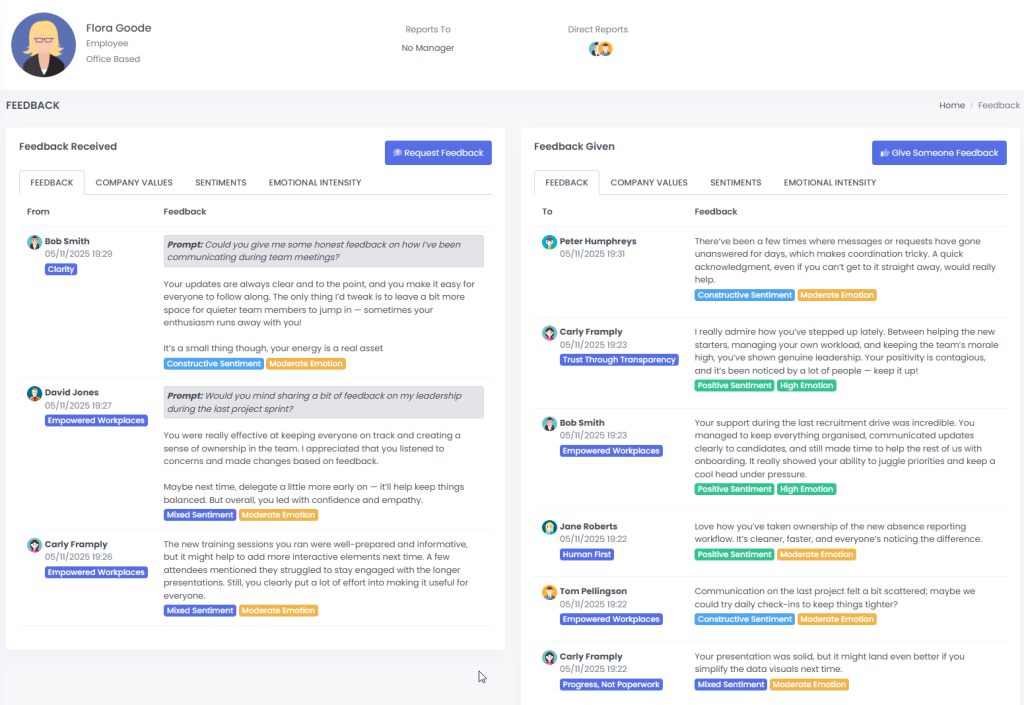
Values-based feedback
Feedback grounded in values helps people understand not only what to improve, but why it matters. It keeps behaviour aligned with the purpose of the organisation.
Recognition tied to mission
Highlighting contributions that reflect the charity’s mission builds pride and belonging. People want to feel their work has meaning.
Simple well-being check-ins
Charity work can be emotional. Regular check-ins show care and prevent burnout, which in turn strengthens commitment.
Clear communication routines
Weekly updates or short team huddles that connect tasks back to the mission help people see the bigger picture.
Consistency across staff and volunteers
HR processes ensure everyone, paid or voluntary, gets a shared understanding of the mission and what it means in daily work.
The role of values in a charity setting
Company Values are how the mission becomes practical. They turn purpose into something people can recognise in behaviour. Values:
- Guide decisions when situations are complex
- Help volunteers understand expectations quickly
- Bring consistency across different teams and locations
- Support accountability in a human, compassionate way
- Create a sense of identity, even in mixed or part-time teams
Values make the mission easier to live.
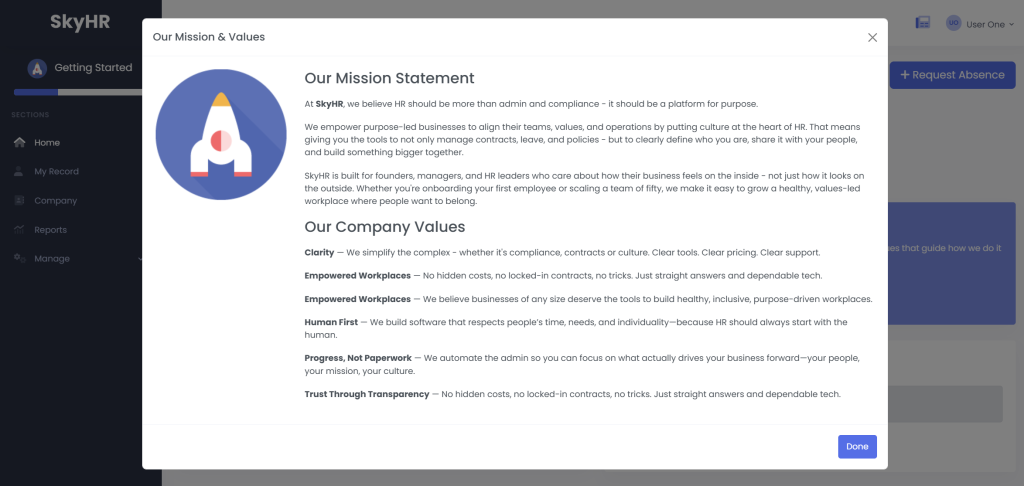
A simple framework to keep the mission alive
Charities can use a light, simple approach to embed mission into everyday experience.
Step one: define your mission in human language
Avoid jargon or long statements. People connect with clear, heartfelt messages.
Step two: embed the mission into the employee and volunteer journey
Onboarding, check-ins, recognition and communication should all reflect the mission.
Step three: make the mission visible
Share stories from volunteers, celebrate meaningful moments and connect routine tasks back to the purpose.
Step four: Use light touch systems to support consistency
A simple HR tool helps ensure the mission is lived and communicated in the same way across teams.
Examples of mission-led HR in action
A foodbank team might recognise volunteers who treat every visitor with dignity and compassion, not just those who complete the most tasks.
An environmental charity might use values to decide how to respond when faced with a difficult choice about partners or events.
A youth organisation might start every team meeting with a short story that reinforces why the work matters.
These moments cost nothing but create a powerful culture.
How HR software helps charities keep mission alive
The right HR software for charities makes it much easier to stay mission-led without adding extra admin work. It brings structure, clarity and consistency to the people experience, whether someone is a member of staff or a volunteer.
- One place to store values, expectations and key information
- Consistent onboarding for everyone who joins the organisation
- Recognition tools that link contributions directly to mission and values
- Clear processes that reduce uncertainty and hesitation
- Better visibility across mixed teams working in different settings
- A more human approach to HR that supports people rather than distracts them
SkyHR is designed around these principles. It helps charities bring their mission into the everyday moments that shape culture, creating a more aligned and purpose-driven experience for their teams.
Conclusion
Mission is a charity’s greatest strength, but only if people feel it daily. HR processes are some of the simplest and most effective tools for keeping that mission alive. With clear habits, thoughtful communication and the right technology, charities can create a consistent, purpose-driven culture that supports staff, volunteers and the people they serve.