

7 HR Challenges in Small Charities With Solutions

Small charities do some of the most important work in the UK, yet they often face HR challenges that larger organisations are better resourced to handle. Limited budgets, mixed teams of staff and volunteers, emotionally demanding roles and constant operational pressure all combine to make HR surprisingly complex.
The good news is that most of these challenges are solvable. With clear processes, mission led communication and the right HR support in place, charities can create a more consistent, confident and connected team experience.
This guide breaks down the most common HR challenges small charities face today, and offers practical ways to solve them.
1. Managing Volunteers and Staff Together
Most charities rely on a blend of paid staff, part time workers and volunteers. Each group may have different expectations and levels of involvement, yet all contribute to the mission. Without structured HR processes, volunteers can feel left out or unsupported, while staff can feel the pressure of holding everything together.
How to solve it
- Use consistent onboarding for everyone
- Share the same mission and values across all groups
- Provide light touch feedback and recognition
- Keep communication simple and regular
- Use HR systems to ensure staff and volunteers are aligned
2. High Administrative Burden
Charity teams often juggle frontline work with admin tasks they simply do not have time for. HR paperwork, spreadsheets, manual record keeping and scattered documents can consume hours each week. This drains energy that should be spent on delivering the mission.
How to solve it
- Centralise information in one system
- Automate simple tasks, such as time off, training reminders or document storage
- Use templates and structured workflows
- Reduce duplication by having one clear process for each HR task
Streamlined HR processes free up staff and volunteers so they can focus on the work that matters.
3. Keeping Staff and Volunteers Connected to the Mission
A charity’s mission is its strongest motivator, but mission can fade in the reality of daily operations. When people lose sight of why the organisation exists, morale dips and work becomes transactional.
How to solve it
- Use mission led onboarding to connect new joiners to purpose
- Ground feedback and conversations in values
- Recognise contributions that support the mission
- Share stories regularly across teams
- Use clear communication routines to show how day to day tasks link to impact
Mission is powerful when it is felt, not just stated.
4. Retaining Staff in a Low Pay Sector
Charities often cannot compete with private sector salaries, and many roles involve emotional labour. This creates a real challenge in retaining good people.
How to solve it
- Provide a clear, supportive onboarding experience
- Offer recognition rooted in mission and values
- Make wellbeing check ins part of normal working life
- Give staff clarity around roles, expectations and boundaries
- Build a strong sense of community and trust
People stay where they feel supported and connected, even when salaries are lower.
5. Compliance, Safeguarding and Training Records
Charities often work with vulnerable groups or regulated activities. This creates extra HR responsibilities, including DBS checks, training updates, right to work documents and safeguarding policies. Manual systems make it easy to miss renewals or lose track of records.
How to solve it
- Keep all compliance records in one place
- Use simple alerts for training expiry or DBS renewals
- Store documents securely and accessibly
- Use consistent processes to remove uncertainty
HR tools built for charities make this far easier by centralising everything.
6. Communication Across Dispersed Teams
Staff and volunteers often operate across multiple locations, irregular hours or community settings. Important updates can be missed, leading to inconsistency and confusion.
How to solve it
- Establish clear communication routines
- Use shared values to guide decisions in different settings
- Provide one place for news, updates and expectations
- Use simple HR systems to keep everyone aligned
Consistent communication builds trust, especially in part time or volunteer led teams.
7. Lack of HR Expertise
In many small charities, HR is handled by someone juggling multiple roles. It might be a manager, administrator, or even a volunteer. This creates additional pressure, uncertainty and risk.
How to solve it
- Use straightforward HR processes that anyone can follow
- Provide templates and checklists to guide the team
- Use HR software designed for charities to reduce admin
- Keep everything in one place so nothing falls through the gaps
Charities do not need complex HR. They need clear, simple support.
How HR Software for Charities Helps Solve These Challenges
This is where HR software for charities becomes invaluable. Instead of relying on spreadsheets, inboxes and assorted documents, software designed specifically for the charity sector supports teams by:
- Providing consistent onboarding for staff and volunteers
- Making values and mission visible in everyday HR tasks
- Storing all records securely in one central place
- Reducing admin through simple, automated processes
- Supporting communication across dispersed teams
- Reinforcing culture with recognition, feedback and clarity
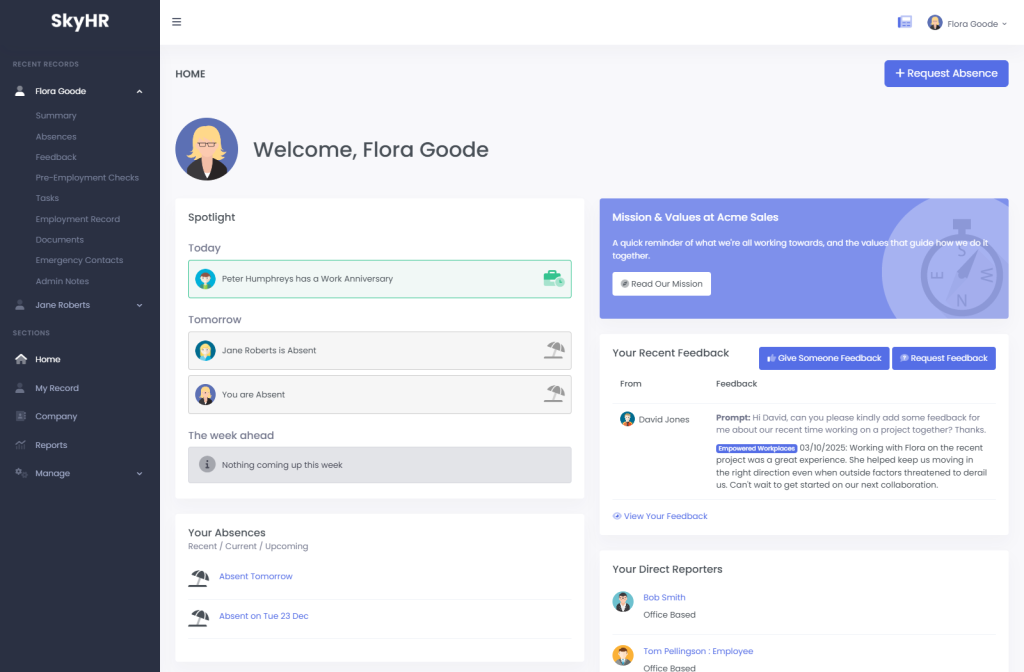
SkyHR is designed around these principles. It helps charities stay mission led, reduce admin and create a stronger sense of belonging for everyone involved.
Conclusion
Small charities face unique HR challenges, but most of them can be addressed with clear habits and the right support. Mission, clarity and consistency go a long way. When charities use simple, mission aligned HR processes, they create a healthier, more confident and more connected organisation.